
TAILPIECES
The tailpiece anchors the four strings at the lower end of the instrument.
Originally, a thin plate of lightweight wood was sufficient to withstand the tension of gut strings. With the arrival of modern metal strings, stronger, but also more demanding, the tailpiece gradually became more robust to meet these new constraints.
Fine tuners appeared later, designed to ease the tuning of these metal strings, which are particularly sensitive to tension. They offer the musician a more precise and more flexible control of intonation.
Bois d'Harmonie tailpieces
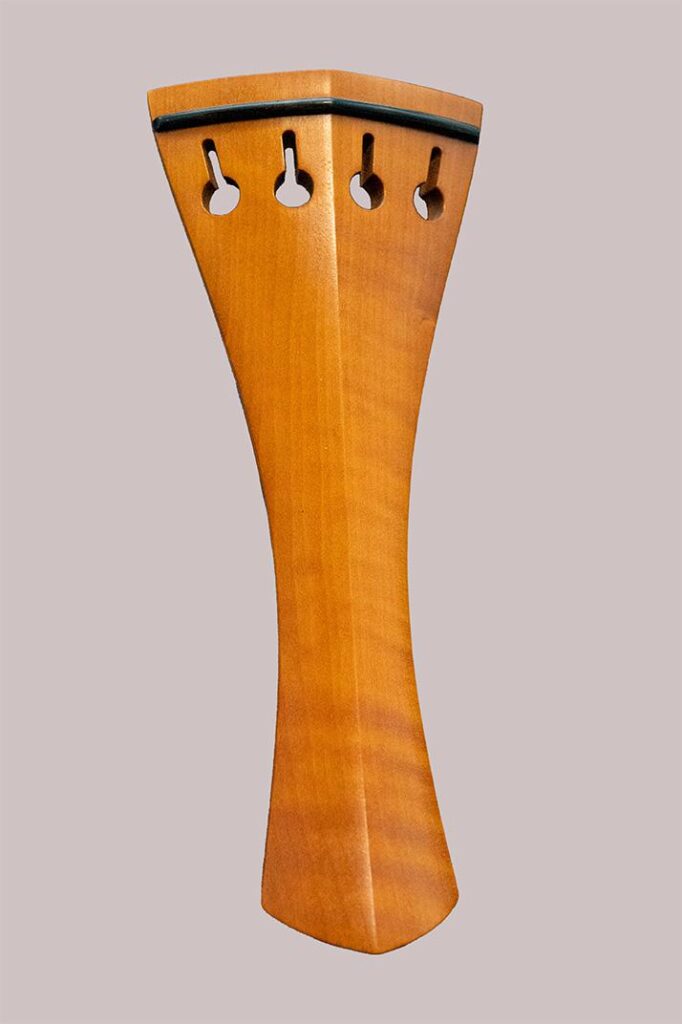
Hill tailpiece
Simple without tuners
The Hill model, rooted in the English tradition, is defined by its pronounced central ridge and its more structured profile.
The French model, characteristic of Mirecourt, features rounder, more open lines, giving it a softer and more fluid silhouette.
Both styles are available in ebony, boxwood, rosewood, or pernambuco, each wood bringing its own colour and material presence.
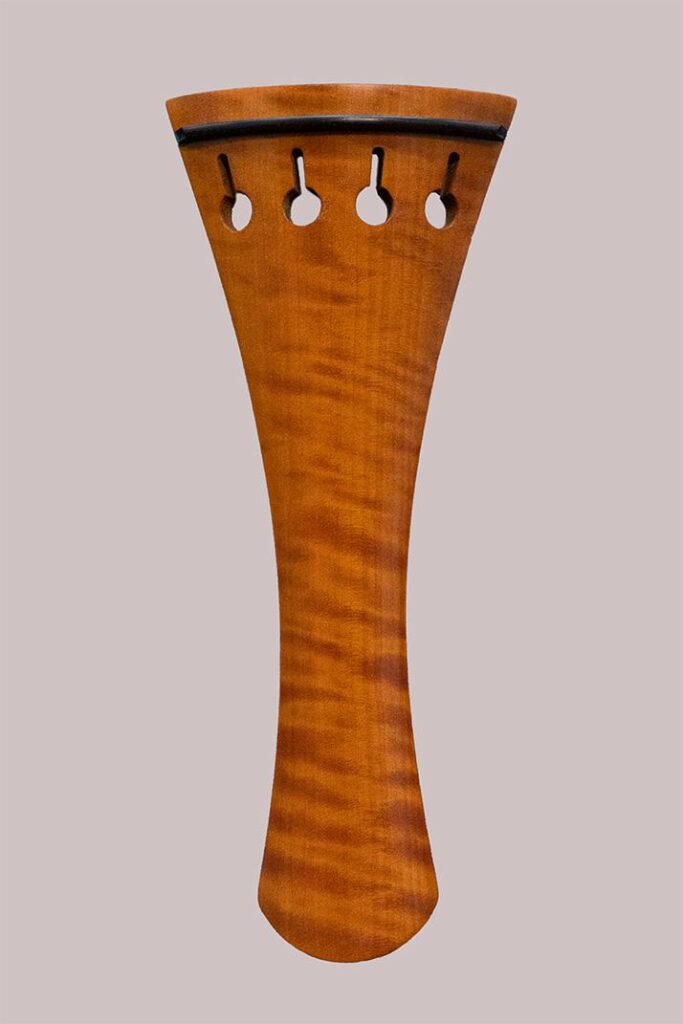
French tailpiece
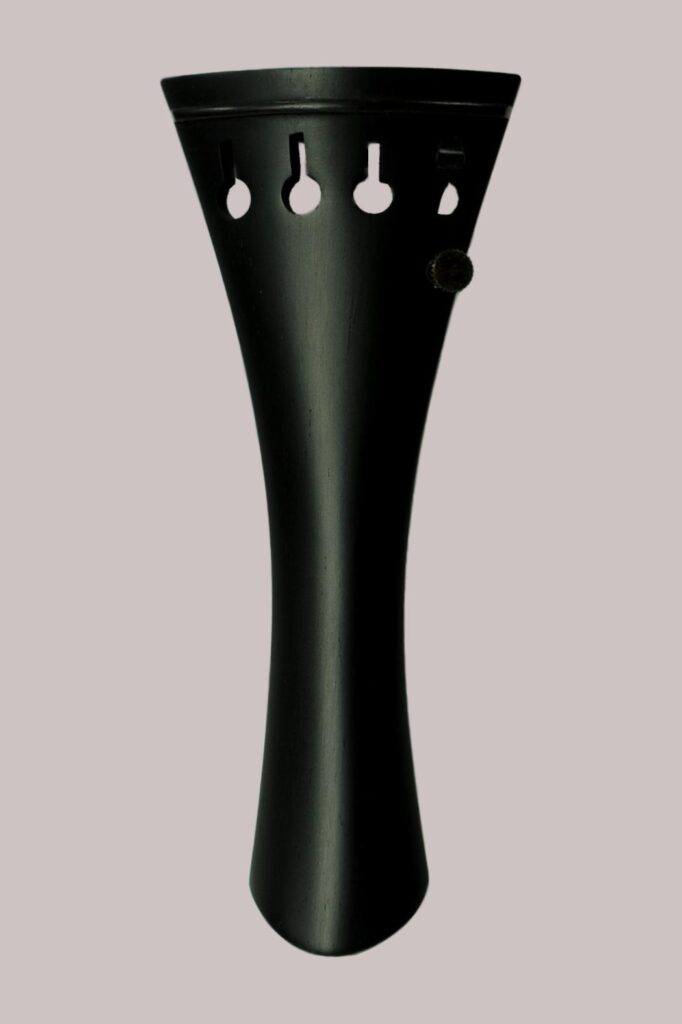
French Ebony violin 1 tuner
Incorporated tuners
A wooden tailpiece — crafted in ebony, boxwood, rosewood, or pernambuco — paired with a lightweight composite tuner that preserves the instrument’s natural neck projection.
The Harmonie models follow the French tradition: ebony tailpieces of standard length, fitted with four integrated tuners.
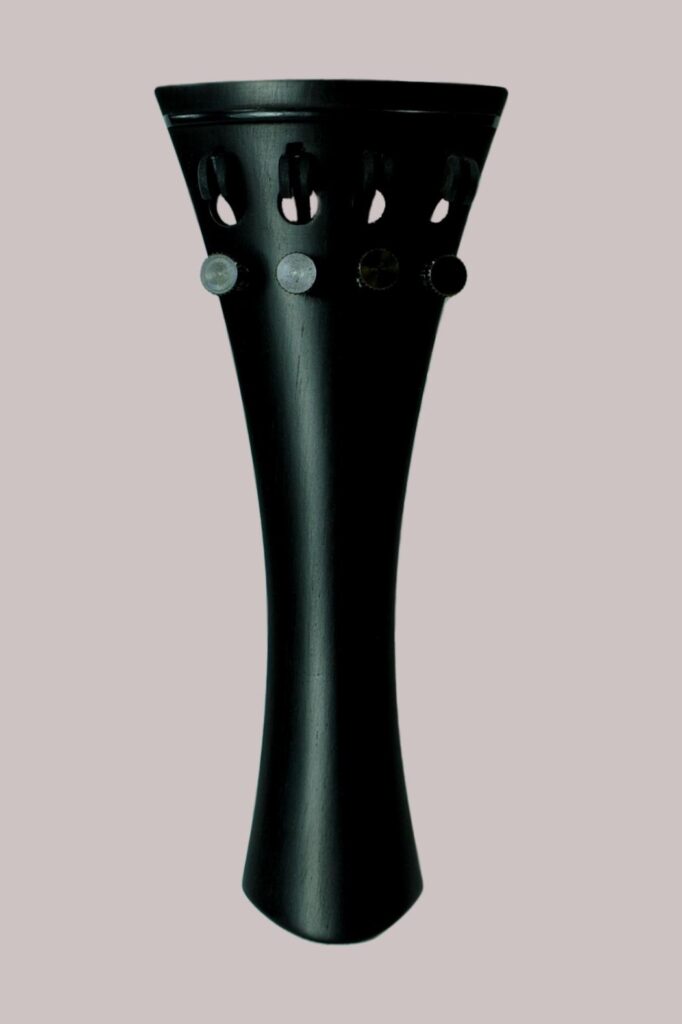
Violin "Harmonie"
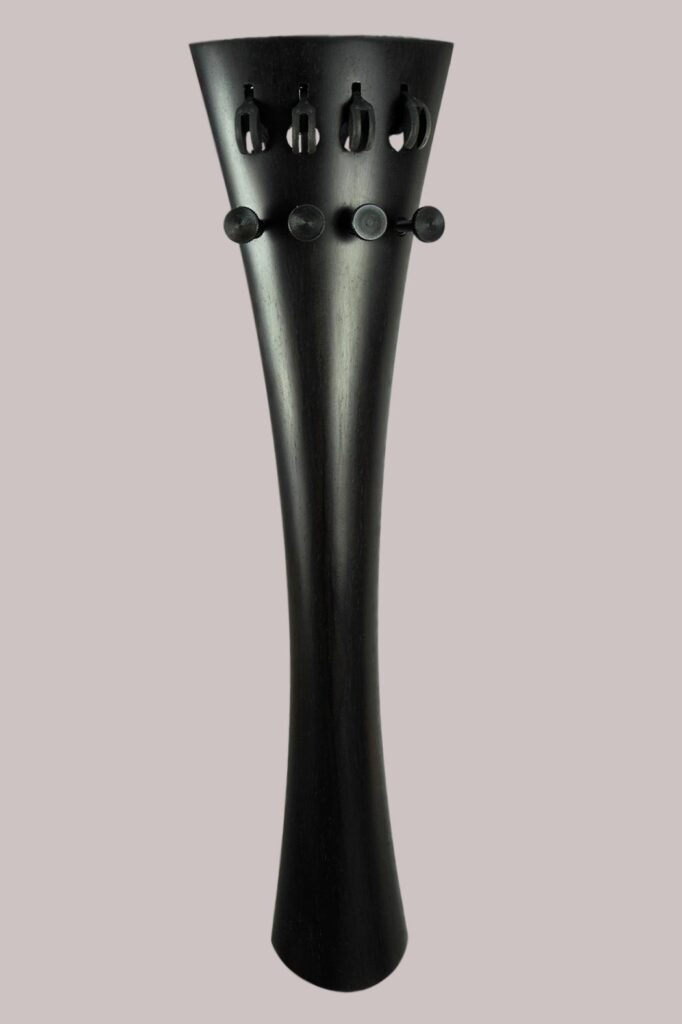
Cello "Harmonie"
Our cello tailpieces with integrated tuners
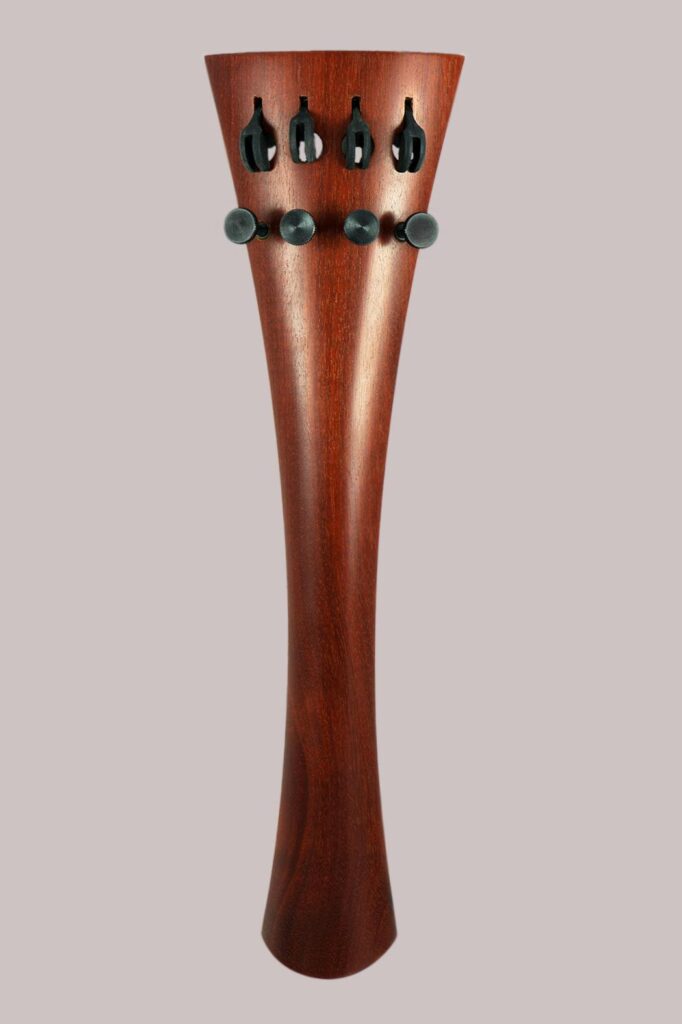
French Cello Pernambuco
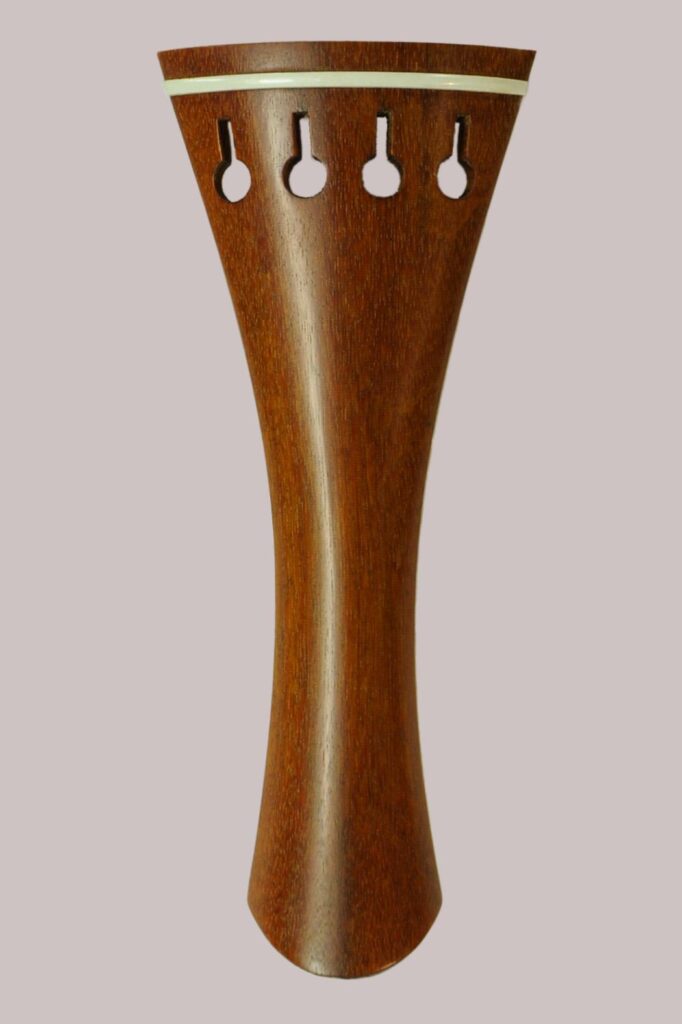
Pernambuco tailpiece
Permambuco
The ability of Pernambuco to sound transmission makes it an ideal wood for tailpieces. Musicians ascribe it a more open sound, a sharp attack, and a better “placed” sound. It is the deluxe version of Harmonie tailpieces.
Sonowood Sonowood is a material developed in Switzerland by SwissWood Solutions, designed as a sustainable alternative to the overexploitation of certain species traditionally valued for their density or stability in the making of quartet accessories. It is produced from local woods — spruce, maple, walnut, beech — which are densified through compression until they reach densities between 1100 and 1400 kg/m³, without any added resins. (model shown : spruce.)
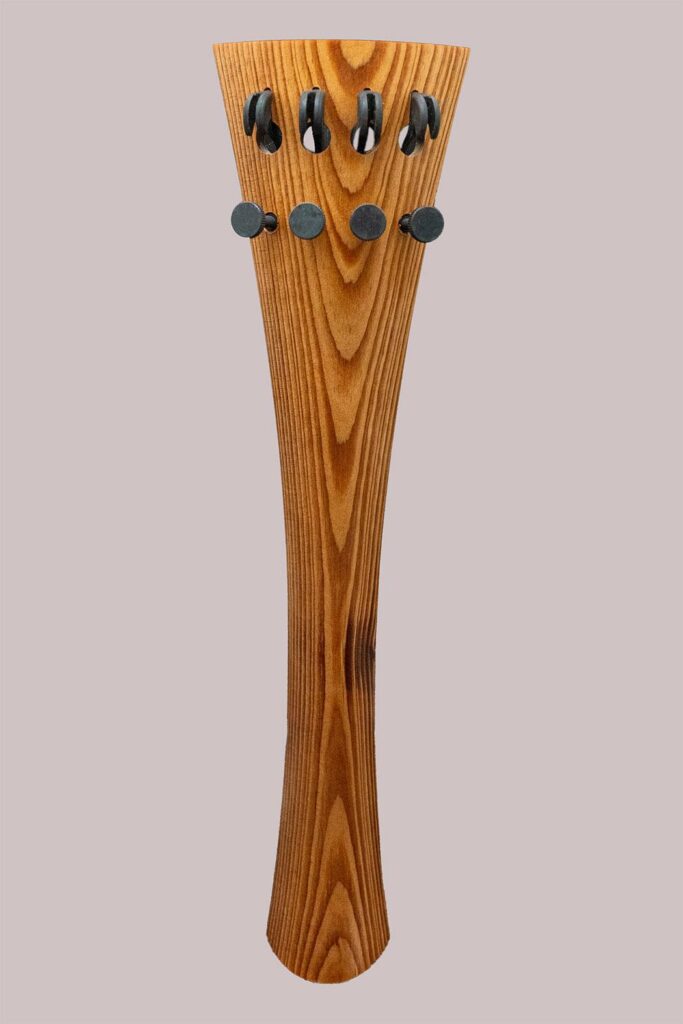
Sonowood
Technical Notes
Several tailpiece lengths are available to ensure the best fit for your instrument:
- Violin: short 108 mm, standard 112 mm
- Viola: short 125 mm, standard 130 mm, long 135 mm
- Cello: very short 200 mm, short 220 mm, standard 235 mm, long 250 mm, very long 260 mm
The length of the tailpiece plays a decisive role in the timbre and projection of your instrument, just as much as the choice of wood.
To assist you in this essential decision, we provide a small downloadable tool that helps determine the ideal theoretical length for your tailpiece.
The extra‑light composite fine tuners are an innovation developed by Bois d’Harmonie. Their design avoids the muting effect often associated with metal tuners and encourages a freer, more responsive sound.
The Harmonie cello model, crafted in ebony, stands out for its lighter weight compared with the black plastic tailpieces commonly used today.
Natural ivory, now too restrictive from a regulatory standpoint, is no longer employed; it has been replaced by bone, a stable material perfectly suited to this purpose.
Violin and viola tailpieces are fitted with a saddle (in ebony or bone).
Cello tailpieces, by contrast, are supplied without one, unless specifically requested.
* Pernambuco is subject to increasing restrictions imposed by local authorities, which severely limit its availability. Our pernambuco tailpieces are on sale while stocks last. At present, our supply of raw pernambuco is exhausted. Please contact us for current availability or for any specific request concerning this wood.