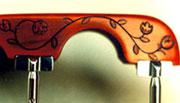
instruments were readily adorned with delicate carvings, fine marquetry, and ivory or mother‑of‑pearl inlays. These ornaments, heirs to the baroque taste, reflect an era in which virtuosity of craft and decorative richness naturally went hand in hand.
A century later, Jean‑Baptiste Vuillaume was working in an entirely different cultural landscape: the dawn of the industrial age. The dazzling feats of a Paganini and the restraint of Victorian taste had pushed the splendour and curves of the baroque firmly into the past. The instrument shed its ornamentation, its lines tightened, its aesthetic grew more sober.
This great French luthier, a brilliant copyist, prolific inventor, and forerunner of modern methods ; saw many Stradivari instruments pass through his workshop. Out of loyalty to the master he so admired, he occasionally perpetuated the tradition of carved pegs and tailpieces, such as those found on the finest violins of the eighteenth century: Amati, Stradivari, Guarneri…
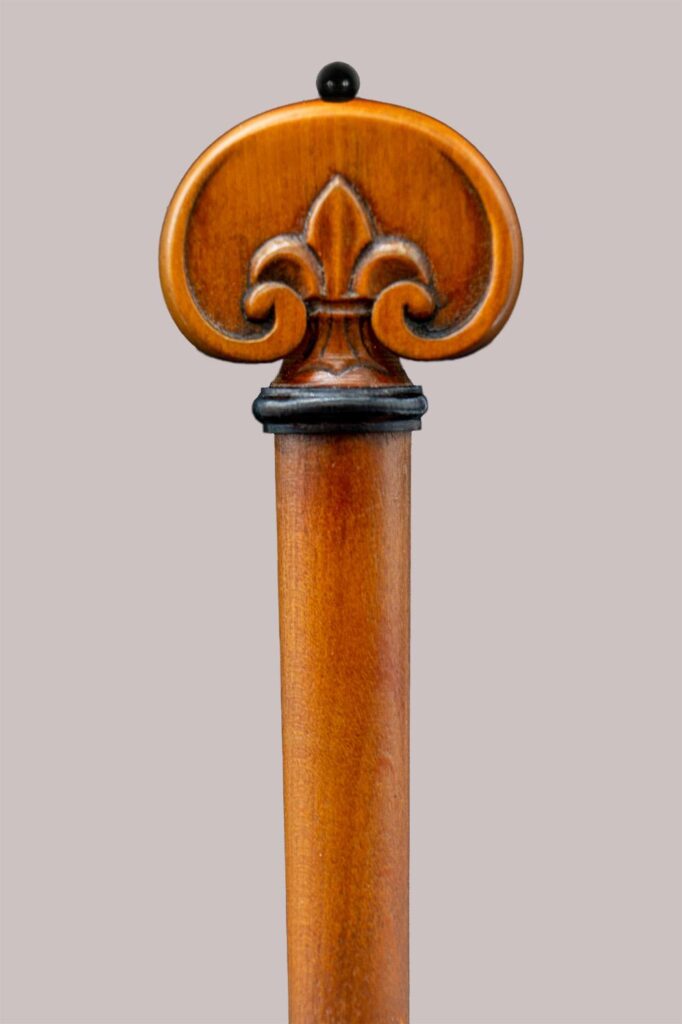
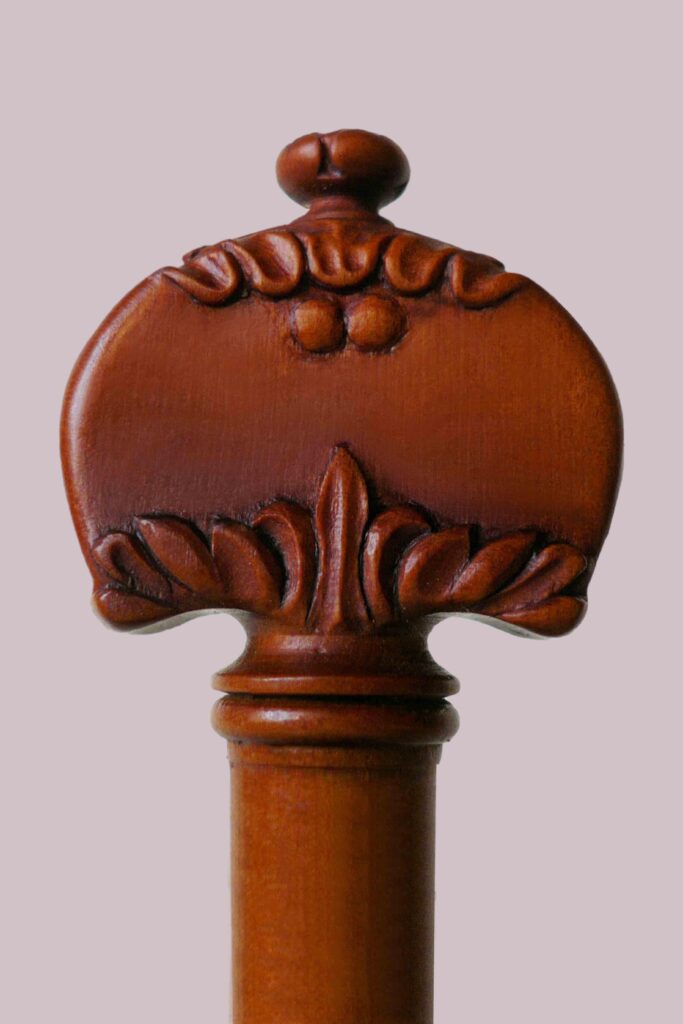
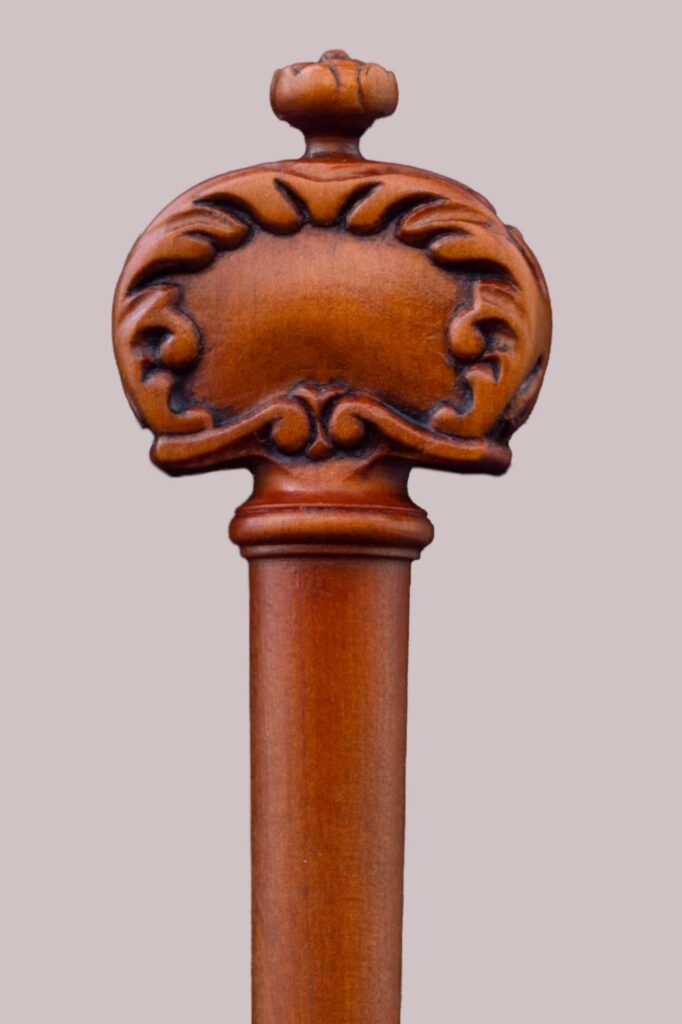
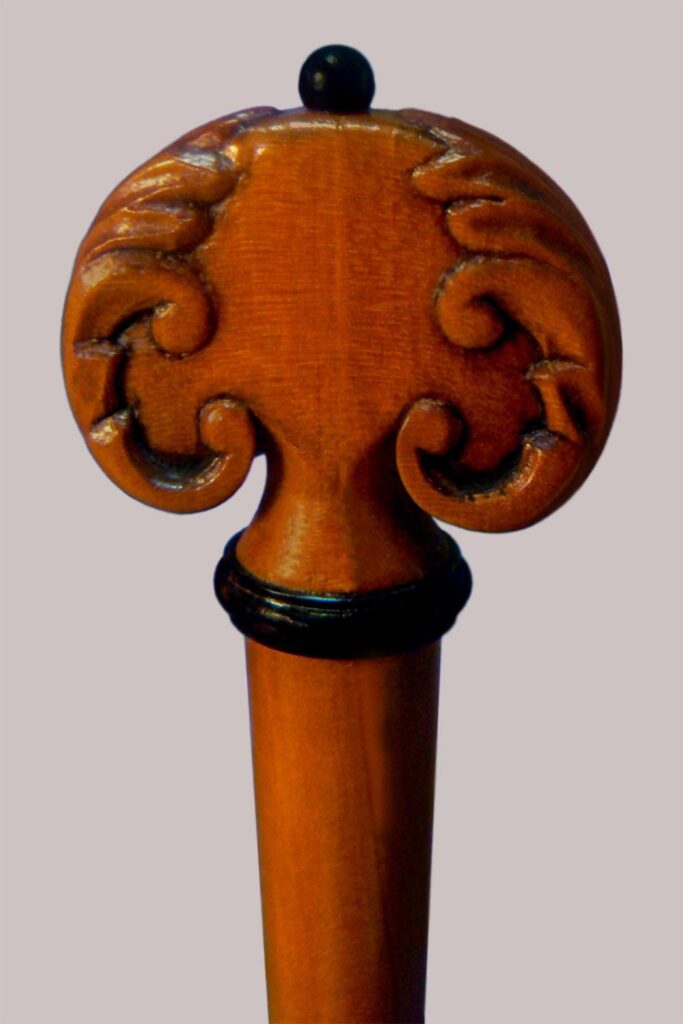
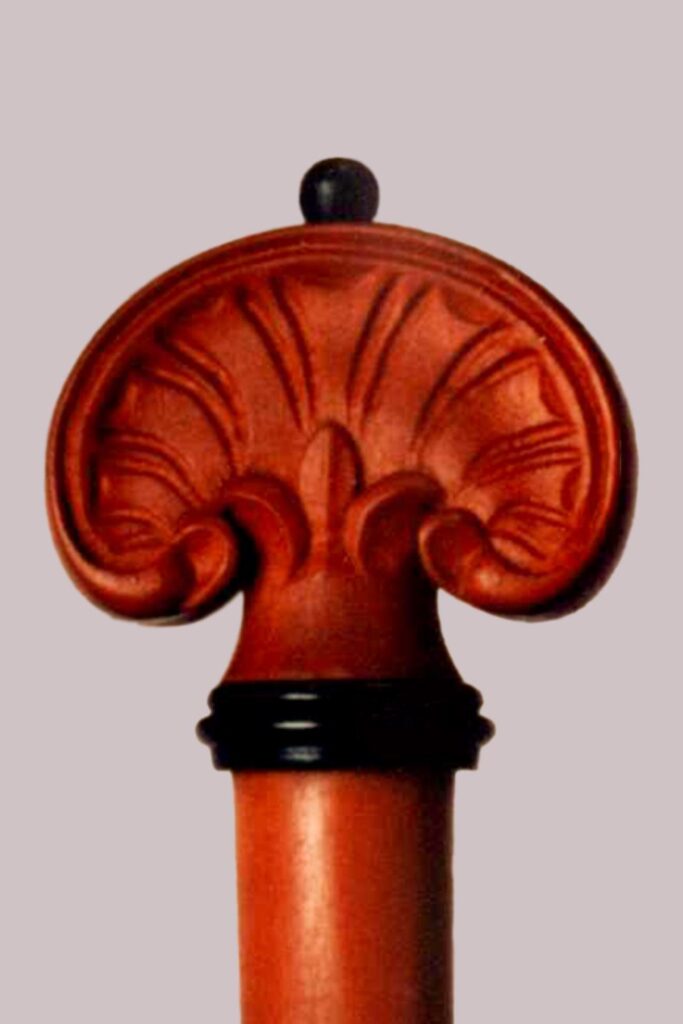
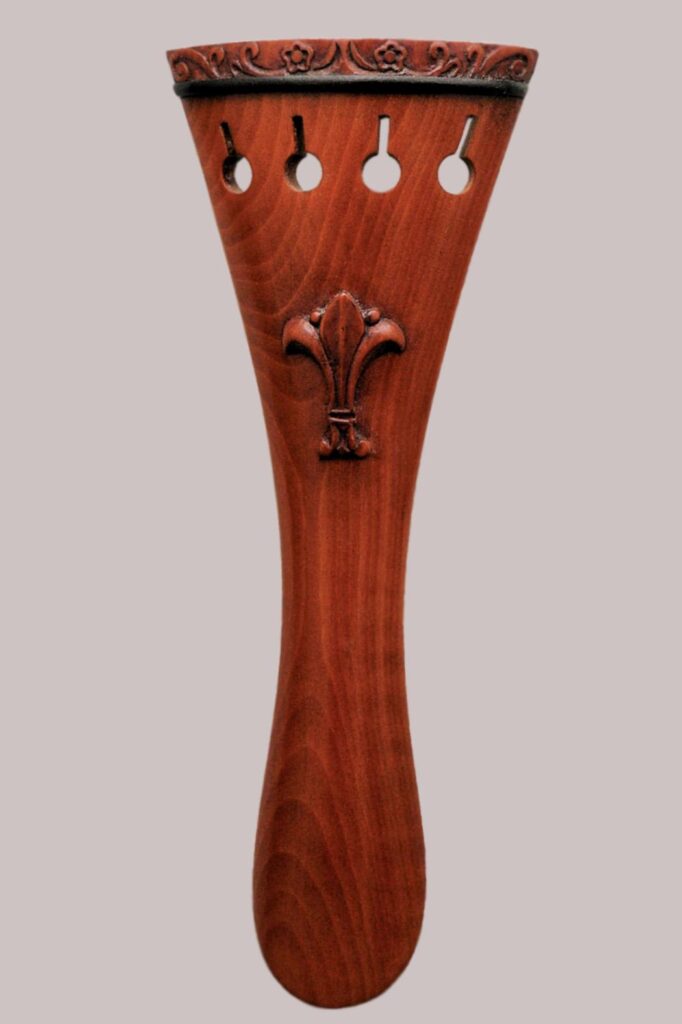
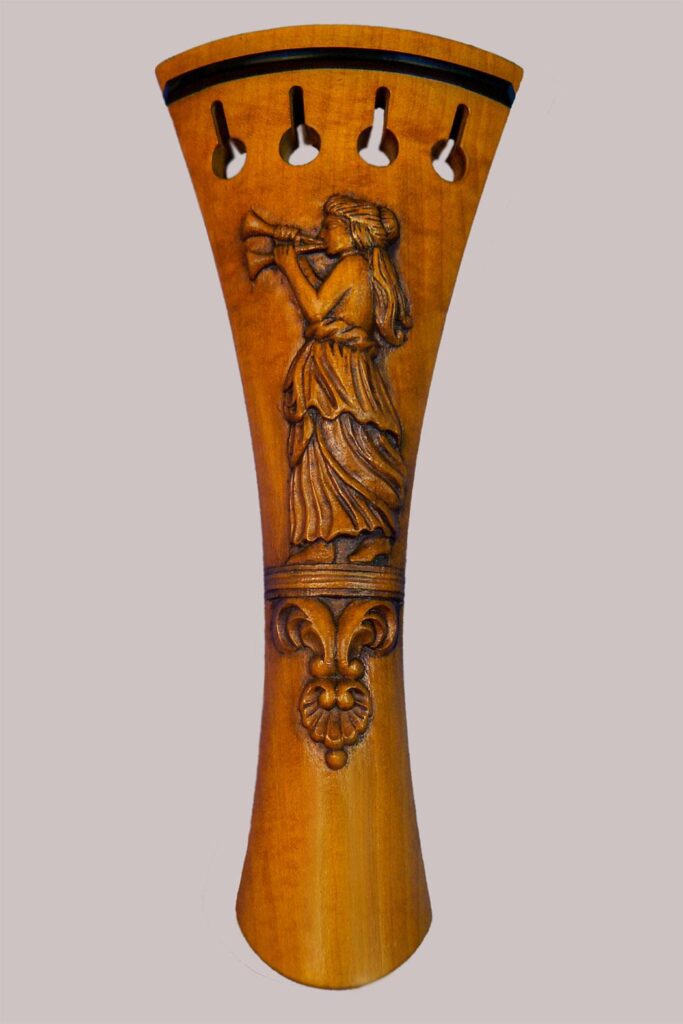
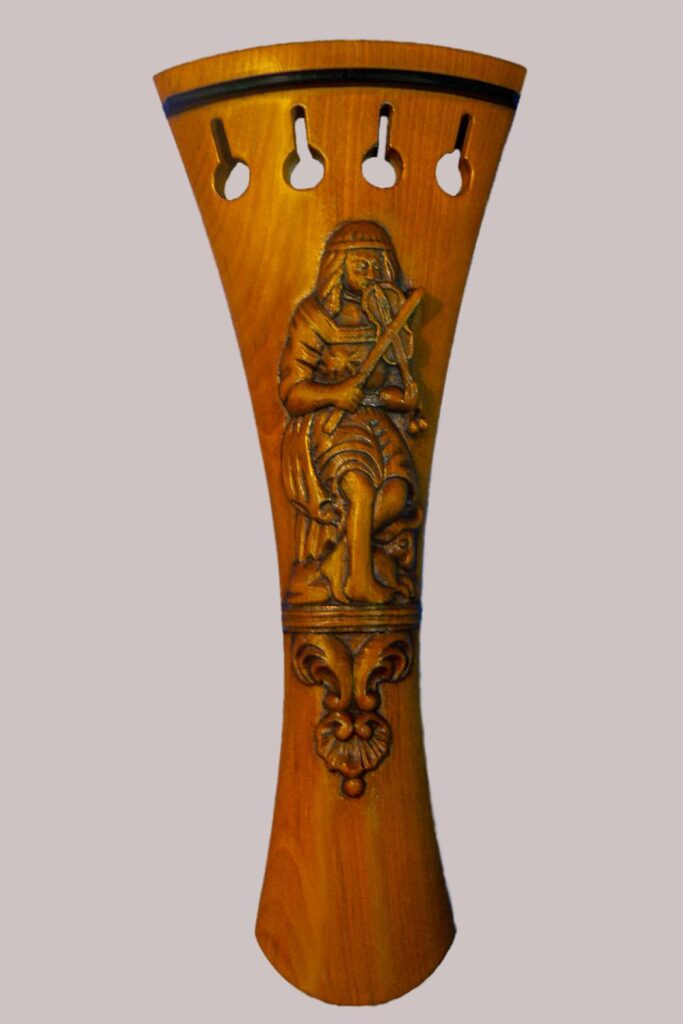
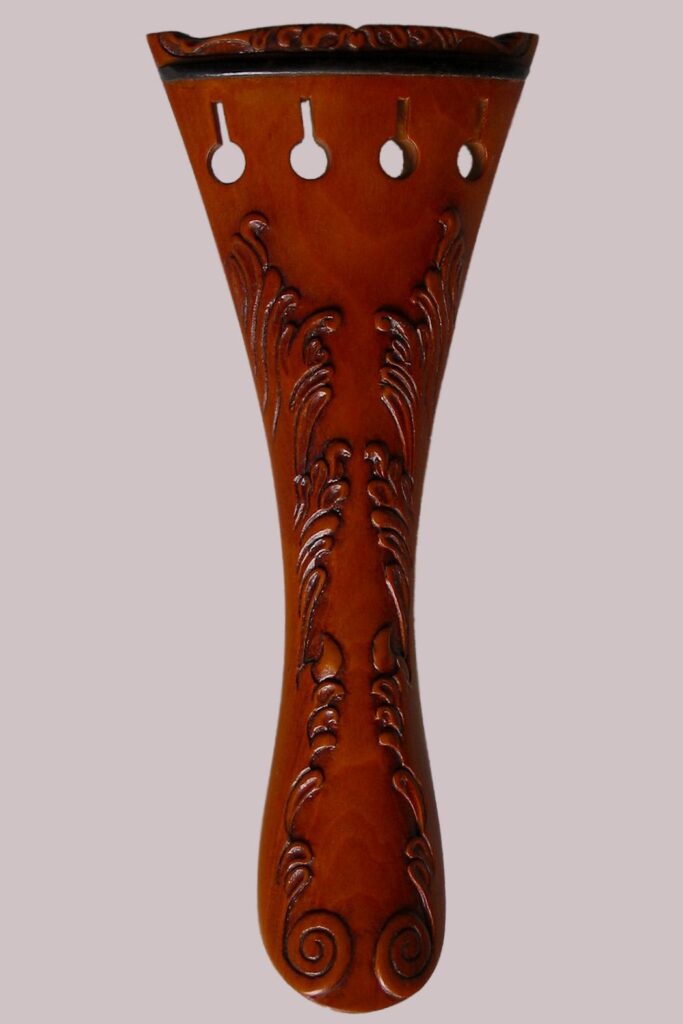
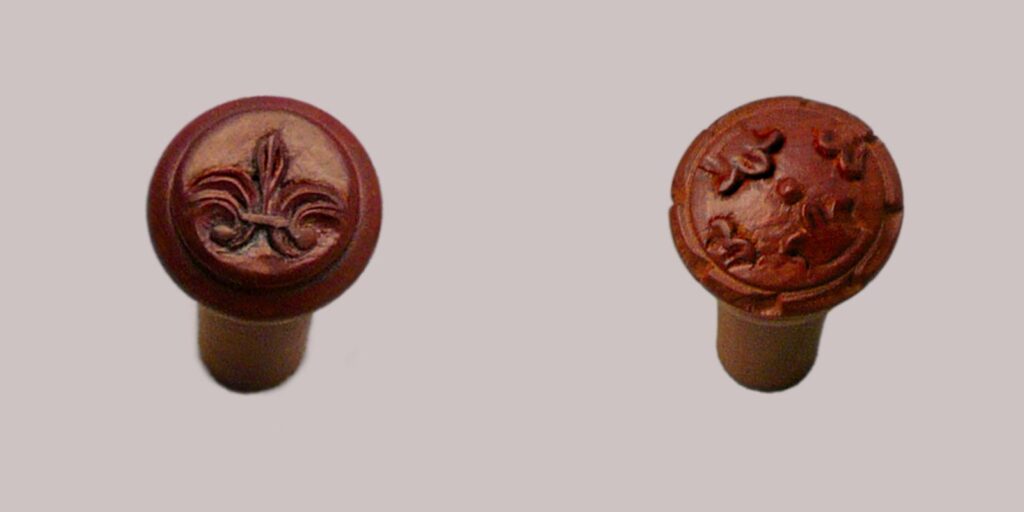
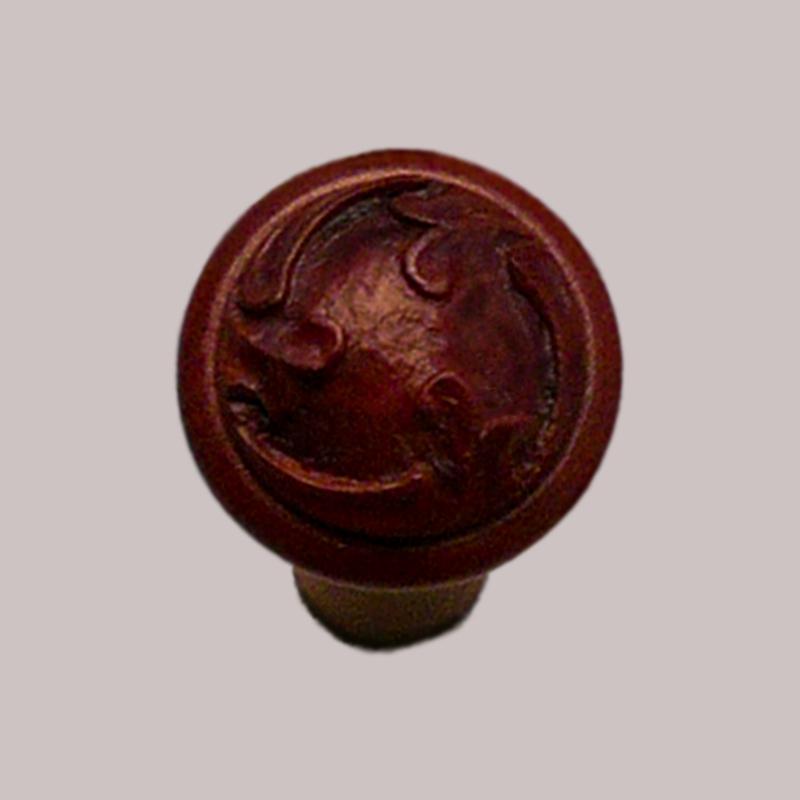
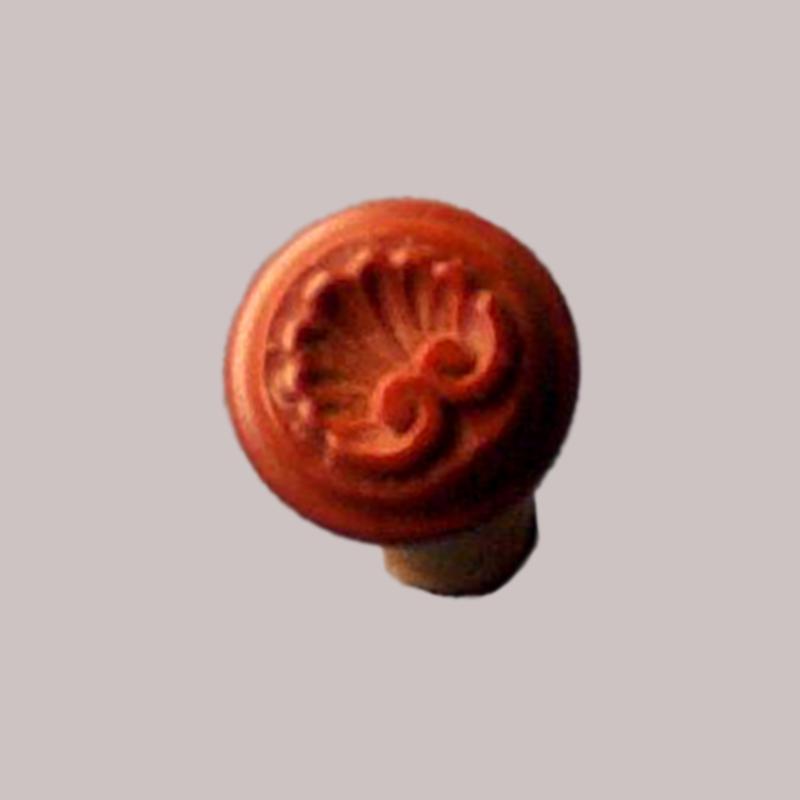
For these decorations, he adopted the motifs fashionable in his own century: rosebud, fleur‑de‑lis, acanthus leaves, shell. Signs of a discreet homage, where the memory of the old masters meets the taste of the nineteenth century.
A tuxedo for Stradivarius: carved fittings
Carved Pegs by Bois d'Harmonie
What could be more ordinary than a peg?
It is a system as simple as it is ingenious: a self‑locking taper, a small handle to adjust the tension, held between thumb and forefinger.
The original peg is absolute simplicity itself: for more than four centuries, its sole contribution to the violin’s voice has been to bring the string to pitch with the greatest possible accuracy.
When the once‑popular instrument of its early days entered the courts of the great, it finally claimed its place in learned music.
It then dressed itself in the emblems of its newfound prestige.
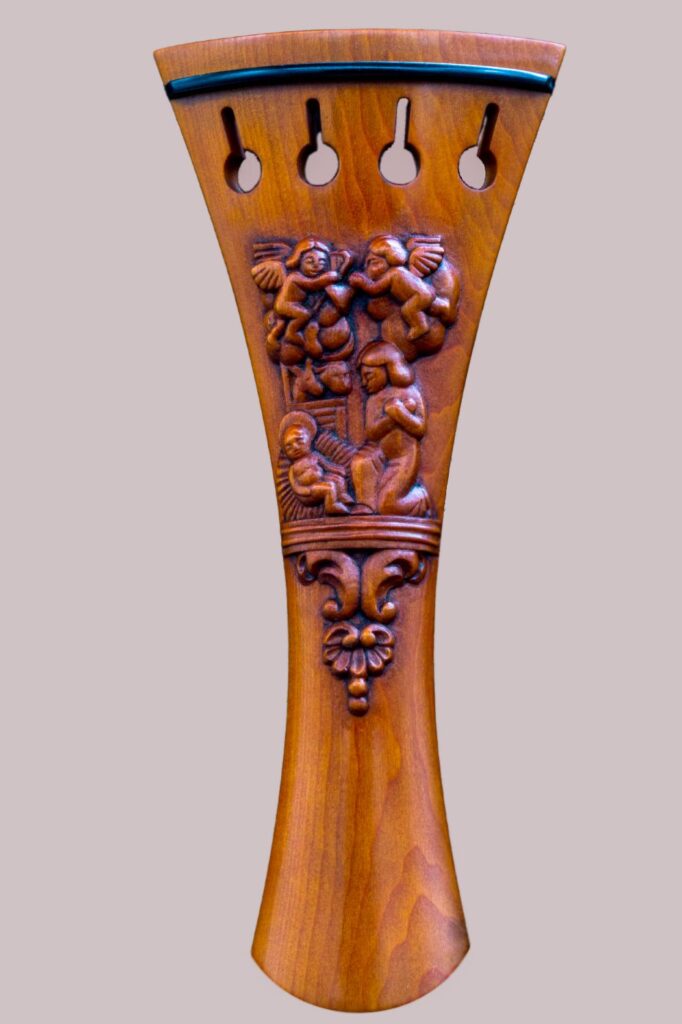
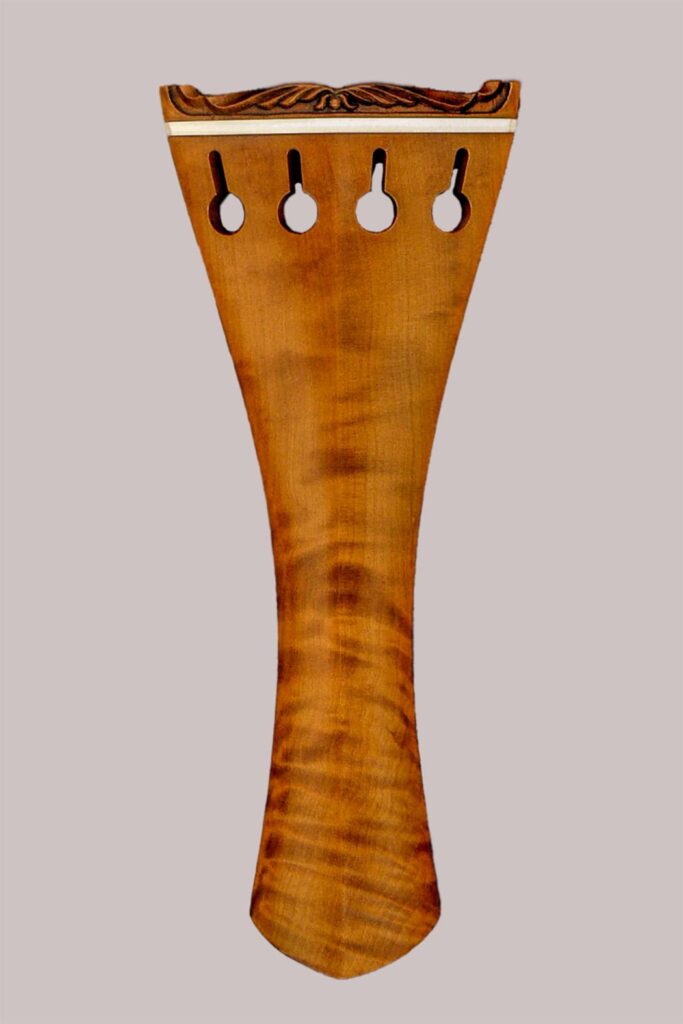
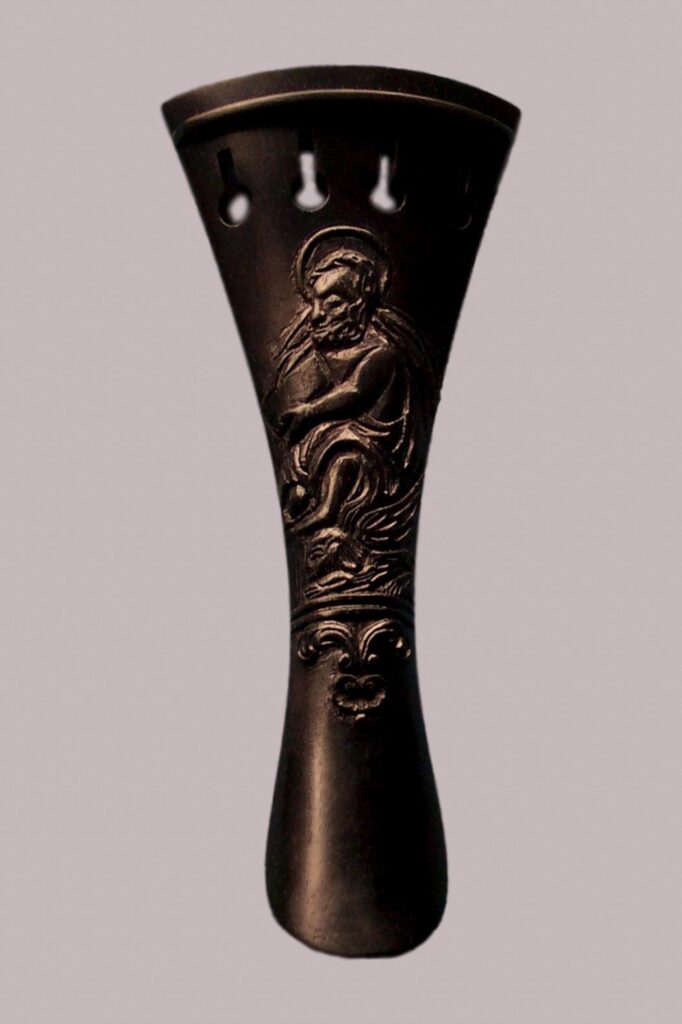
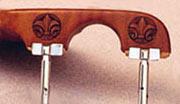
Carved Tailpieces by Bois d'Harmonie
To respect the principles of violin making and preserve the instrument’s acoustic potential, the tailpiece remains the only place where a musician may leave a personal mark, by having an initial or a symbol engraved on it.
Technical notes
These pieces are most often crafted in boxwood, but can also be made in ebony.
The choice of wood depends on personal preference, the instrument’s style, and the shade of its varnish, ensuring an aesthetic coherence that is both subtle and harmonious.
They are made exclusively to order, and the production time is therefore included in the delivery schedule.