When the cello was still merely a bass accompaniment instrument, it was often played while resting on a simple bench, the instrument leaning naturally against the player’s body.
In the early 20th century, a short wooden endpin, barely fifteen centimetres long, appeared, designed to stabilise the instrument and make it easier to hold.
Gradually becoming indispensable, except in baroque practice, which still dispenses with it, this endpin lengthened over time, following the evolution of playing technique, performance spaces, and sonic demands.
Bois d'Harmonie Cello Endpins
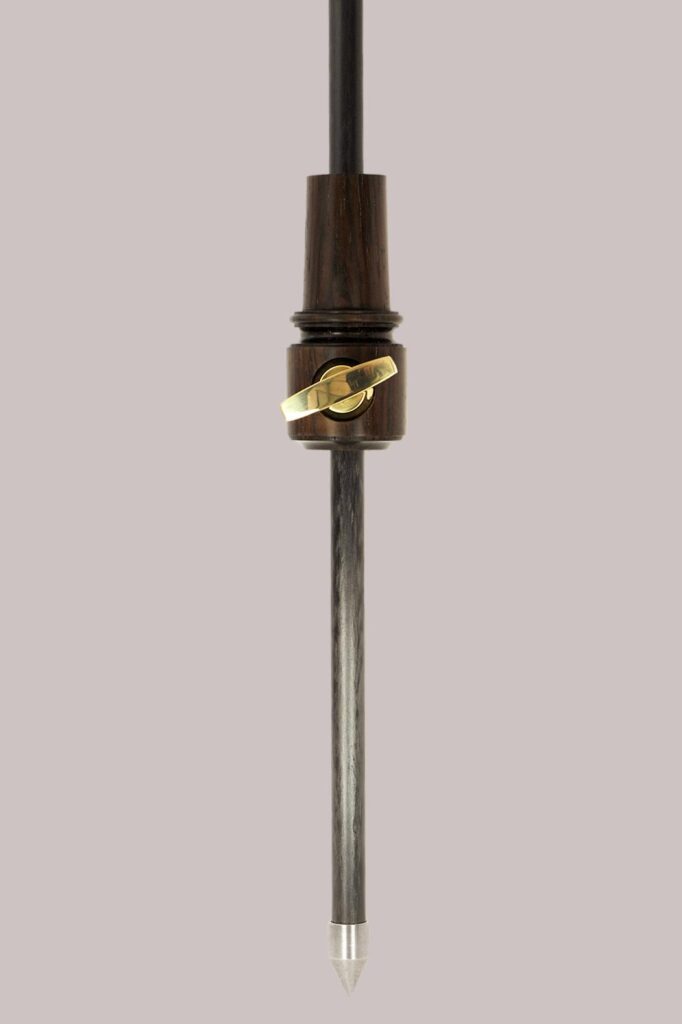
Our classic endpin is made of a wooden sleeve paired with a carbon‑fiber rod. It features a tungsten‑carbide tip — extremely hard and exceptionally durable — that remains sharp at all times. The carbon rod, stiffer and three times lighter than a steel one, reduces the cello’s weight by approximately 130 g.
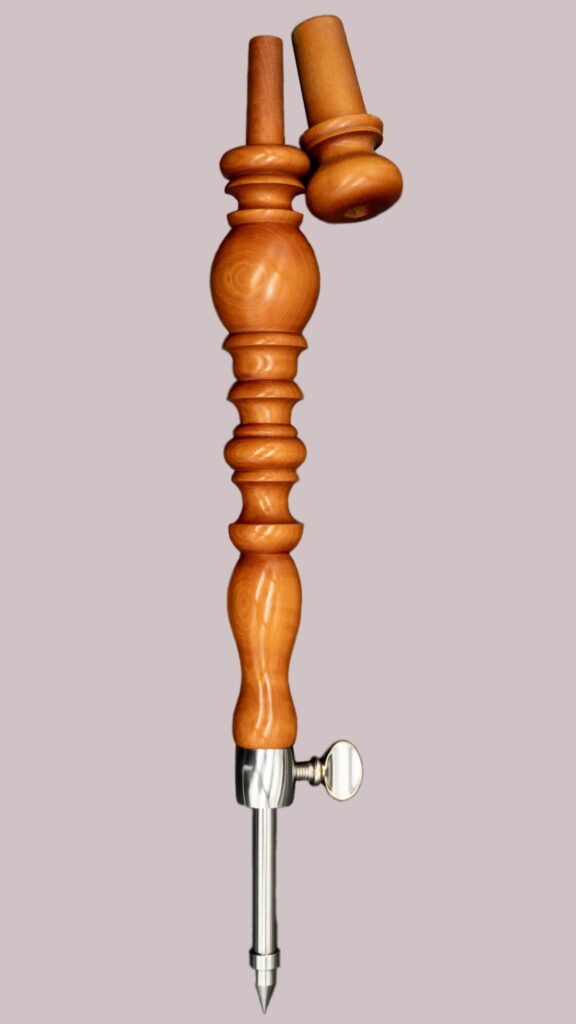
We also offer a solid titanium rod, as well as a lightweight titanium version.
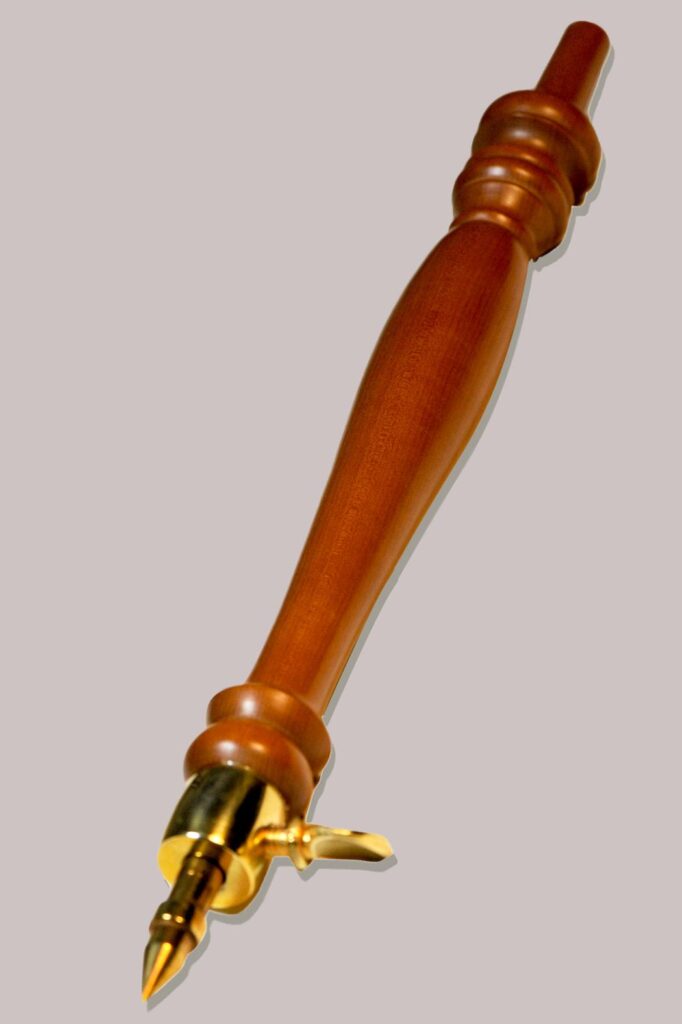
Both the Mirecourt and baroque endpin models have a maximum length of 41 cm and are composed of two detachable sections.
Technical Note
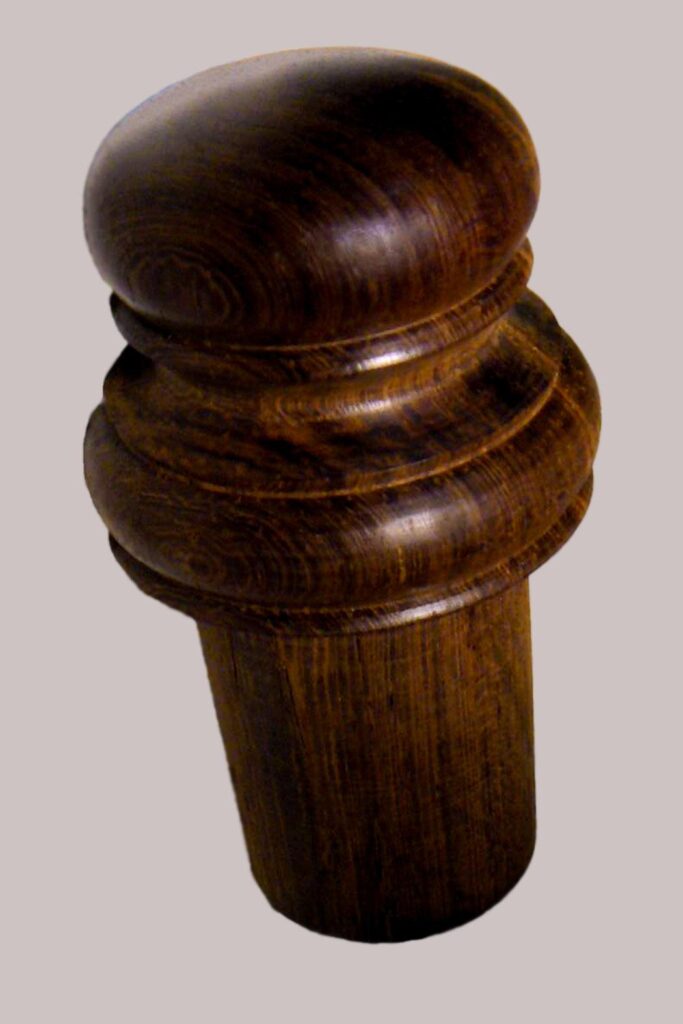
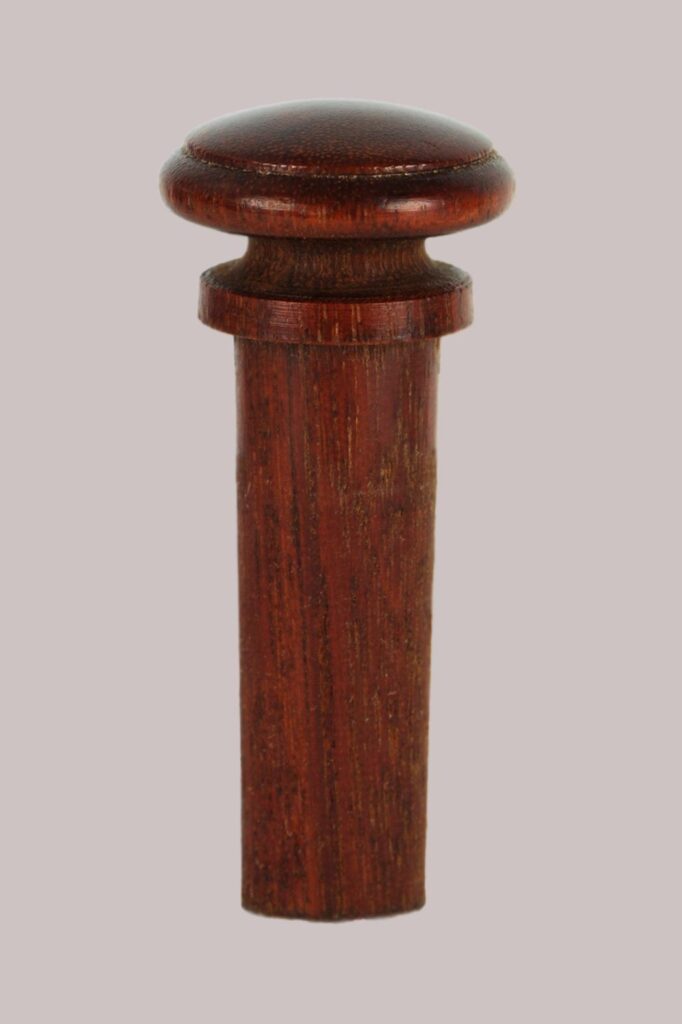
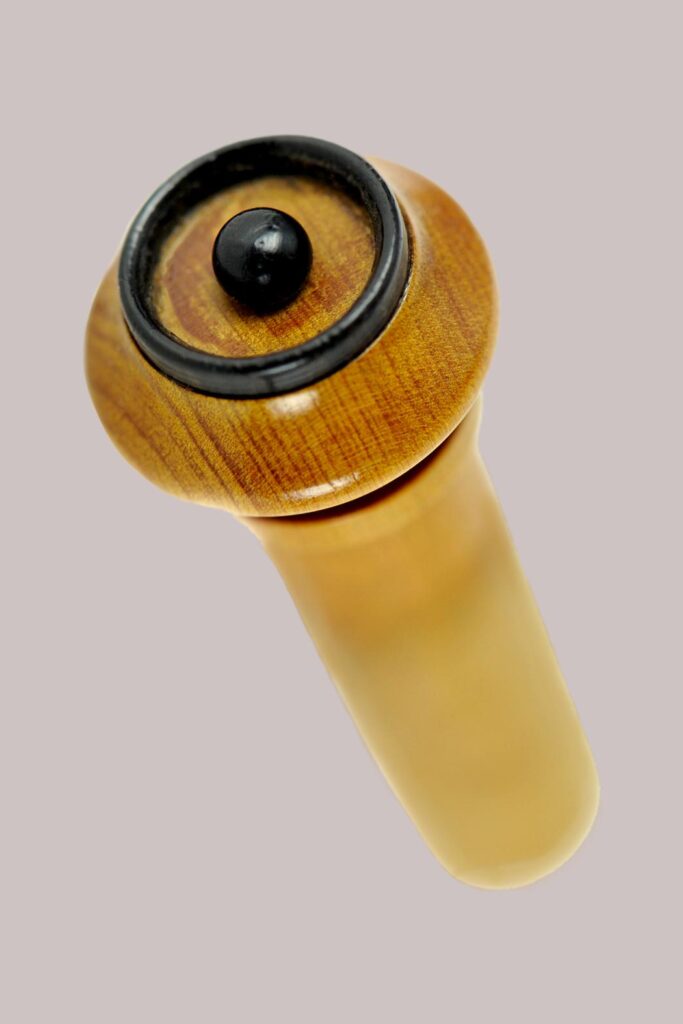
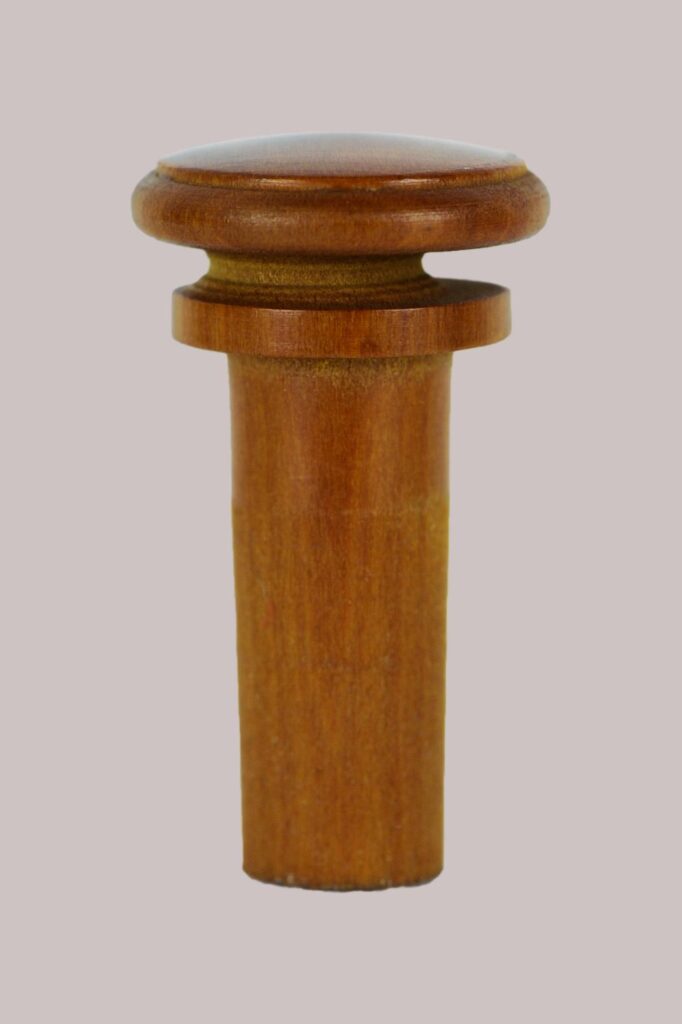
All endpins are crafted in boxwood, ebony, or rosewood.
A pernambuco option is also available for the classic model.
The rod is made of carbon fibre and fitted with a tungsten‑carbide tip.
It is also possible to replace the carbon rod with a solid titanium or lightweight titanium version, depending on the musician’s needs.
The sleeve features a standard taper with a maximum diameter of 25 mm.
An exceptional diameter of 27 mm can be supplied, and we also produce custom endpins with precisely adjusted diameters, up to a maximum of 29 mm.